
(858) 224-9100
Lysis, binding, wash, and elution buffers for column-based and magnetic bead DNA/RNA extraction workflows. Compatible with Filtrous extraction kits and standard silica membrane protocols.

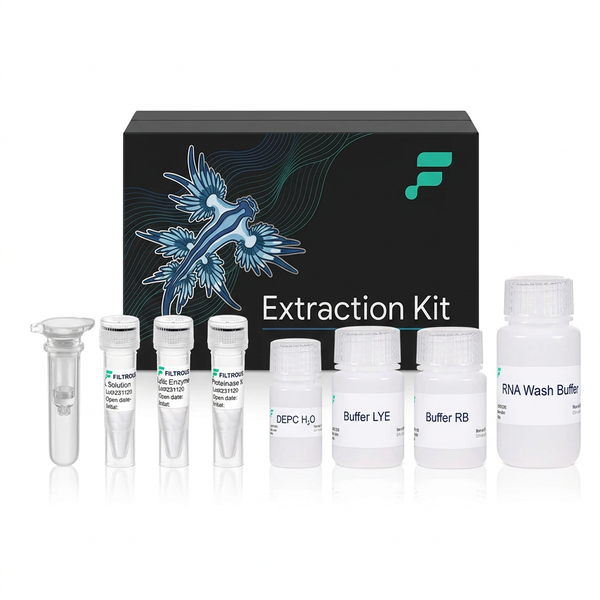
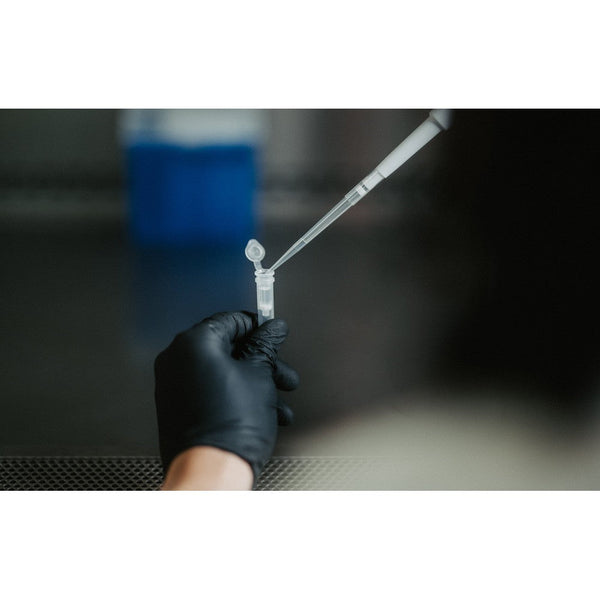
SKU: EXK-CO-0050
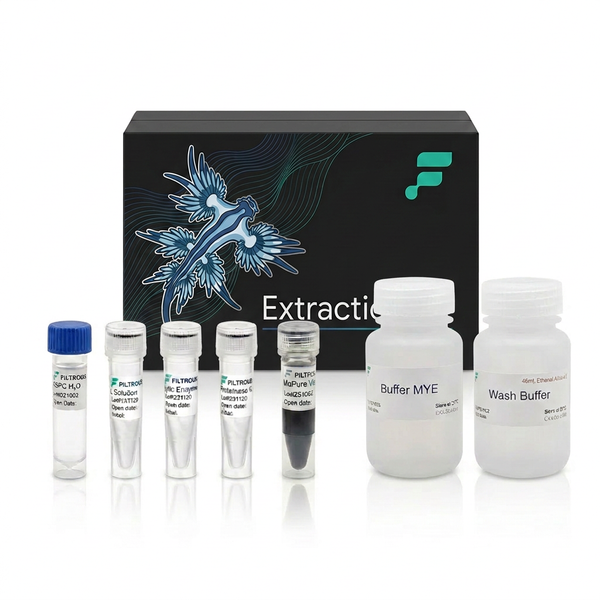
SKU: EXK-BD-0096
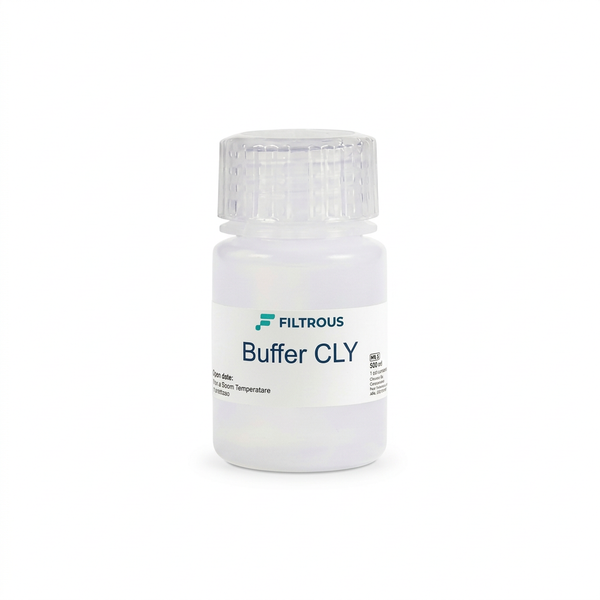
SKU: EXK-CL-0100
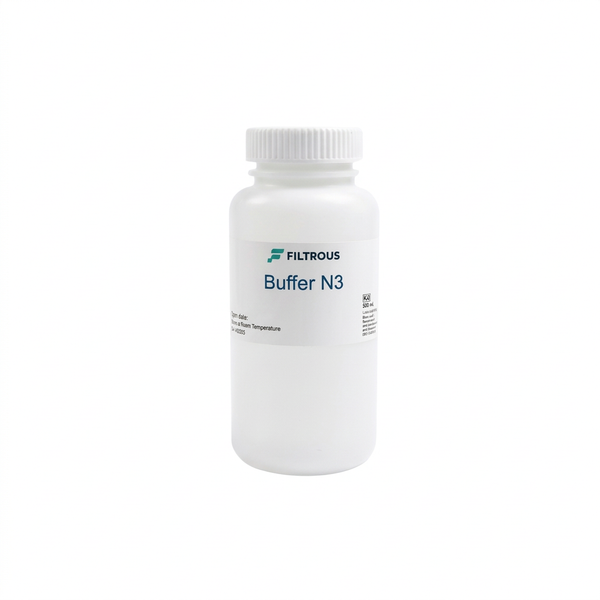
SKU: QBE-N3-0500
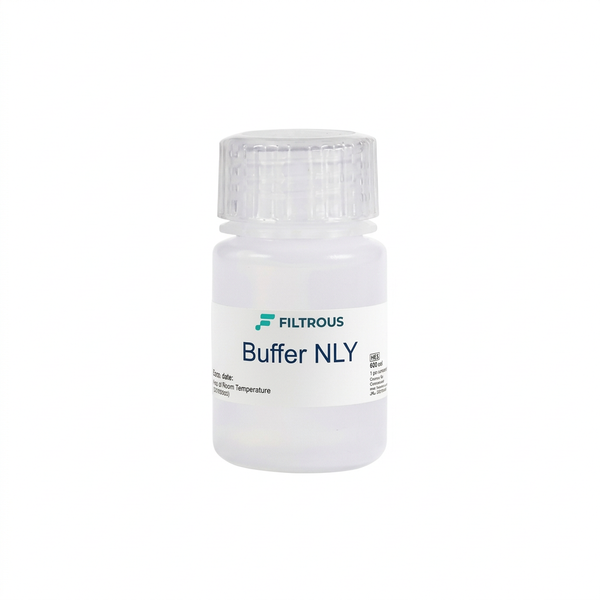
SKU: EXK-NL-0100
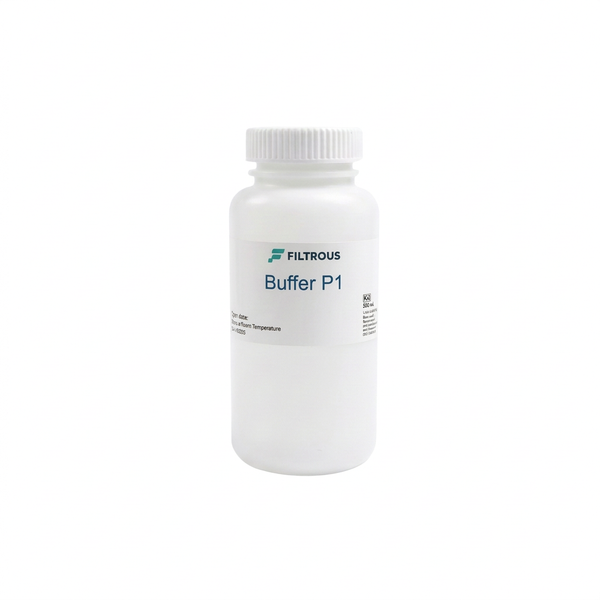
SKU: QBE-PX-0500
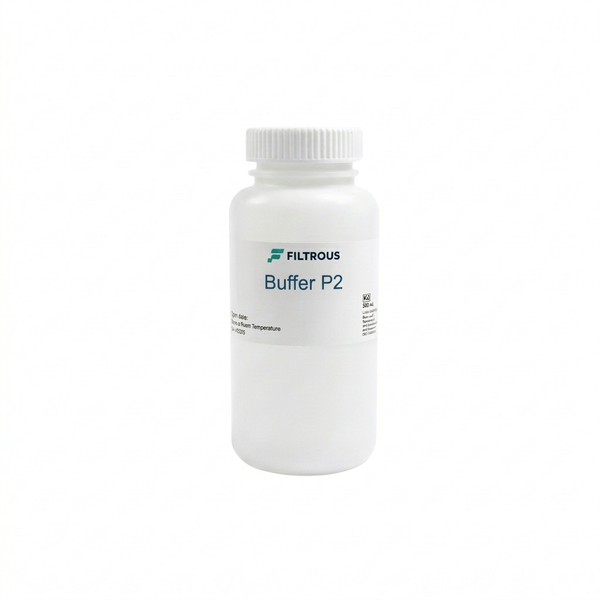
SKU: QBE-PY-0500
SKU: QBE-PZ-0500
SKU: QBE-PB-0500
SKU: QBE-QB-1000
SKU: QBE-QC-1000
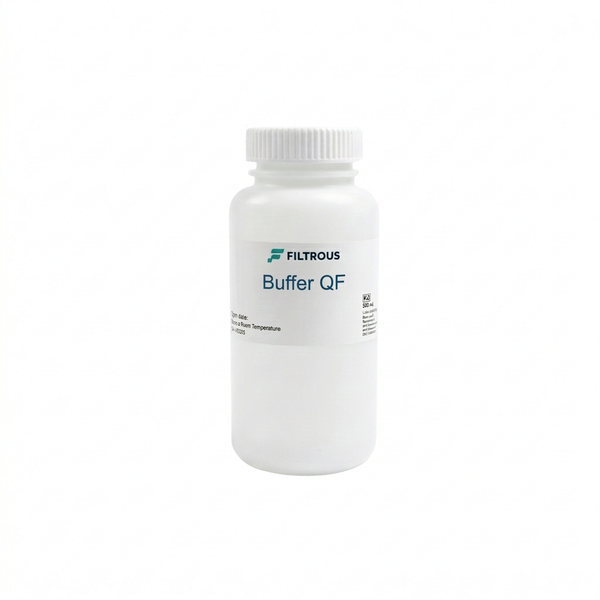
SKU: QBE-QF-1000
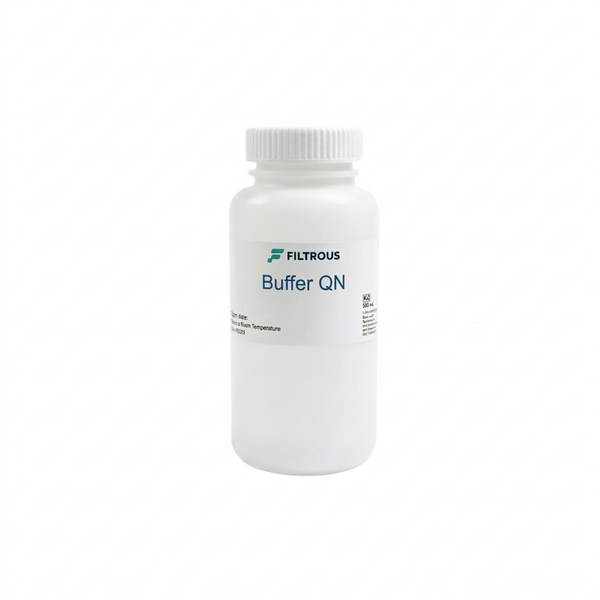
SKU: QBE-QN-0500
Each step of nucleic acid purification requires a specific buffer chemistry. Lysis buffers (P1, P2, N3) break open cells and denature proteins. Binding buffers (PB) create the chaotropic conditions that drive DNA/RNA onto silica membranes or magnetic beads. Wash buffers (QC) remove salts, proteins, and other contaminants. Elution buffers (QF) release purified nucleic acid from the column. These buffers are sold individually for labs that need to replenish specific reagents without reordering a full kit.
Store buffers at room temperature (15–25°C) unless the label specifies otherwise. Buffer P1 (resuspension buffer) should be stored at 2–8°C after adding RNase A. Check for precipitates before use — warm to 37°C briefly to redissolve if needed. Buffers containing SDS (P2, lysis buffers) may precipitate below 15°C.
Yes. All of our extraction buffers are available as standalone bottles. This is useful when you run out of a specific buffer before other kit components, or when you need extra wash or elution buffer for modified protocols with additional wash steps.
Our buffers are formulated for use with Filtrous extraction kits and columns, but the underlying chemistry (guanidinium-based lysis, isopropanol binding, ethanol wash) is standard across silica membrane platforms. Many customers use them with compatible third-party columns.
Most buffers have a 2-year shelf life from date of manufacture when stored at room temperature in sealed containers. Buffer P1 with RNase A added should be stored at 2–8°C and used within 6 months of reconstitution.
P-series buffers (P1, P2, P3, PB) are used in miniprep and standard column-based extraction workflows. Q-series buffers (QBT, QC, QF, QN) are used in anion-exchange purification protocols (midiprep and maxiprep scale) where larger volumes and gravity-flow columns are used.